Biters

Photo by Belper Unitarians on Unsplash

A story that follows on from the events in Out of the London Mist

“Thank you for coming here,” Alfred Gipton said. He watched Inspector Halton get down from the hansom cab and nodded to the cabbie. “You can take the horse around the back, there’s stabling there.” He managed a brisk smile under his immaculate moustache, but tension radiated from him. “Allow me to introduce myself. I’m Alfred Gipton, owner of the Scholes Aether Mine. It’s good of you to come, sir.”

“Inspector Halton, Scotland Yard. I was in the area, taking a rest cure when Colonel Bramley got in touch,” Inspector Halton said, shaking Gipton’s hand. “It’s a coincidence that I’m in the area, but my superintendant remembered that I had had some experience working with matters to do with aether energy. I’m happy to help out any friend of Colonel Bramley.” He looked down briefly as he remembered his superior’s comment. “Gipton is a toad,” the colonel had said, “but his brother was at Harrow with Charlie – you remember my son Charlie? So I suppose I’ve got to throw him a bone. How’s the rest cure going? Derbyshire driving you mad yet? Anyway, don’t let Gipton get carried away. And if it looks like something criminal, pass it over to the local boys in blue. You’re Scotland Yard, not Derbyshire County Constabulary. The nearest station is in Matlock, somewhere called Bank Road. Shouldn’t be too hard to find in that tiny place. I’ll owe you a favour.” Inspector Halton was not going to share that with the mine owner. He brought his attention back to Gipton.

“I believe I saw something in the papers,” Gipton said. “Something about a murder in the East End of London, like Jack the Ripper. There’s nothing like that here. But while it’s quieter than London, Matlock and Matlock Bath are quite the thing. There are visitors all year around. There are always people coming and going.”

“It’s a very pleasant town,” Inspector Halton said politely, thinking that Matlock and Matlock Bath together seemed smaller than Mile End, and would fit neatly into any small corner of Bethnal Green or Hackney.

“I’m sure it seems quiet compared to the East End of London,” Gipton said. “But you should have seen it two years ago, during Queen Victoria’s Diamond Jubilee celebrations. The whole of Matlock Bath was lit up and shining – and it was powered by aether stones from this very mine!” Gipton hesitated. “Were aether stones involved in those murders in the papers? I’ve heard all sorts of rumours.”

“I’m not really at liberty to say, sir,” Inspector Halton said, diplomatically. “So, tell me what’s going on here.”

“It’s extortion, that’s what it is!” Gipton snapped. “Pure extortion. You need to find the fellow at once!” He led the inspector into a low, grey stone building, through a passage and into a spacious and airy office with a bright fire that was welcome after the chill of the early spring air.

“What fellow?” the inspector asked as he was ushered in.

Gipton looked over to the corner of the office. “Scholes, you explain. I get caught up in it.”

Inspector Halton followed Gipton’s gaze. The tall, broad young man in the corner was in his early twenties, with dim blond hair and, unlike the older, darker Gipton, was clean shaven. “I don’t think that we’ve been introduced.”

“I’m Francis Scholes,” he said. “I know that all the detectives in books like to have things set out. Why don’t I get Mrs Stanton to fetch tea and you can sit back and listen. It’s an odd tale.”

Gipton snorted as Scholes leant out of the door and shouted for tea. “That lad’s wandering in his wits. He’s got a steady job here, guaranteed, but instead he sends off for night classes in literature and poetry. There’s no money in words.”

Inspector Halton looked at Scholes’ broad back. He looked more like a farmer or a miner than a poet. “Some people seem to make a living out of it.”

Scholes wandered back in. “That’s true,” he said. “But not with poetry.” He smiled, his bright blue eyes glinting a little in the aether lights. “My hobby is poetry, but my employment is business. I hope I give satisfaction.”

Gipton waved an irritated hand. “Aye, you do, but that’s not the point. Now if you were studying bookkeeping or something practical, well, I wouldn’t have to send the books in to Matlock to get them sorted out. You could do it.”

“This is an aether mine, isn’t it?” Inspector Halton interrupted what seemed to be a well-worn grievance. “It’s just I don’t see any evidence of mining. There’s no noise or men around.” He lowered himself stiffly into a chair and watched as a motherly woman bustled in with a tray.

Gipton groaned and ran his hands through his hair. “I’m ruined!”

“The inspector may be able to help,” Scholes said. He watched Mrs Stanton pour tea and waited until she left. “As far as I know, this is unheard of.”

“Ouch!” The inspector rubbed his hand and looked down as a red, circular welt appeared. Something silver and gleaming scuttled down the leg of the chair and into the carpet. “What was that?”

 “We call them ‘biters’, and there aren’t that many around at the moment,” Scholes said. “At one point we were overrun with the creatures.”

“It was a menace!” Gipton snapped. “The mine was crawling with the damned things. You couldn’t move for them. They stole the miners’ snap…”

“Snap?” Inspector Halton asked.

“Packed food, like lunches,” Scholes explained. “And not just that. They got into the wiring, they swarmed around the pumps – they were everywhere!”

“Eat the cheeses out of the vats, and licked the soup from the cooks’ own ladles, Split open the kegs of salted sprats…” Inspector Halton quoted. He looked at the blank expressions of the two men. “It’s from a poem, The Pied Piper of Hamelin. I learn poetry by heart to train my memory. It reminded me. It’s about a plague of rats.”

“I’m not familiar with it,” Scholes said as he concentrated on adding sugar to his tea.

“I don’t know about ladles, but they swarmed through Mrs Stanton’s tea urn and we couldn’t have tea at all unless we brought it in flasks,” Mr Gipton said. “And we had to drink it quick when it was poured.”

“They appeared when we broke through into another cavern,” Scholes explained. “It was a very promising source of aether stones. I suspect that they were beetles trapped there for centuries and they became accustomed to the aether energy and fed on it.”

“This part of Derbyshire is riddled with caves,” Gipton said, holding his tea close. “There are passages and tunnels all over. The Romans came here for lead. There are workings everywhere as well as the natural caves, and lots of odd nooks and crannies. But this is the first known source of aether crystals.”

“It’s a surprise that it took so long to find the aether stones,” Scholes said. “But Mr Gipton has been mining them here for the last six years. There was no trouble until we broke through to the new seam.”

“The fat was in the fire then.” Gipton said. He took a long drink of his tea. “It’s bad enough with the miners having to do short shifts on account of the effects of the stones. Once the biters turned up, they couldn’t do any shift at all! Nothing seemed to work.”

“We tried the usual baits for beetles,” Scholes said. “But we got no results. Then we got an anonymous letter.”

Inspector Halton leaned forward. “What sort of letter?”

“I’ll get it for you,” Scholes said and stood and strode over to the mahogany filing cabinet. “It should be here somewhere.”

“We sold the aether stones all over the Empire,” Gipton said. “Our last shipment had to be cleared by the Foreign Office as we sent it to Siam. It’s best quality stones, and our miners bring out the crystals in bigger pieces than almost anywhere else.” He looked around. “You see that brass plate? That’s from the Siamese foundry.”

Inspector Halton looked around. A huge circular plate the size of a cart’s wheel hung, gleaming in the harsh lights. It was beautifully cast with circles of ornate patterns and figures. “That’s what they sent us. I insist on it, you know, as part of the contract. Scholes Aether Mine Limited gets something from the equipment made with our aether stones, first off the press.”

“You must have a lot of scientific breakthroughs here,” Inspector Halton said. “Aether crystals and aether energy are the latest thing.”

Photo by mdreza jalali on Unsplash

“We don’t get the aether machines,” Gipton said. “And we don’t bother tinkering around with what they can do. But we get what they make. Look at that clock, now. The best timekeeping, aether powered, Swiss made and perfect.” He shook his head. “You can see the scratches on the casing where the biters climbed all over it. It’s a crying shame. I was thinking of asking a craftsman from Chesterfield to refinish it, but that costs money. And money is short!”

Inspector Halton let his eyes wander around the office. It was a large room, expensively carpeted with Persian rugs and with doors in all walls leading to passages and storerooms. Oak filing cabinets ranged around as a frame for the two massive desks in the centre. There were even a few aspidistras in the corners. It looked like a top solicitor’s office. The inspector looked closer. These were the products of the latest discoveries. The desks had mahogany tops, but the frames were the intricate brass latticework being produced by the new aether powered foundries in Benares in India. The leatherbound blotters were stamped with details and designs that showed they came from the best craftsmen in Lucca, Italy. Scientific instruments from Germany, Switzerland and the United States hung, mounted on dark, gleaming wood and resplendent in bright brass bezels. “It’s quite a cosmopolitan selection,” the inspector remarked.

“All exports were cleared by the Foreign Office,” Gipton said quickly. “And the lights and the fire are British made, and top quality with it.”

The inspector looked closer at the polished brass lights. They shed the harsh aether light, as expected, and the gleaming fire threw out plenty of warmth without a stick of wood or lump of coal, as expected from the best in Birmingham. “And you have some supplies here,” Inspector Halton said, nodding at a pile of metal sheets stacked in a corner.

Gipton frowned. “I’m still not sure about them,” he said. “They turned up without a covering letter. Scholes wanted to send them back, but I said that you never know when something like that will be useful, and aluminium is expensive stuff.”

“Aluminium?” Inspector Halton asked. “Isn’t that used to shield aether energy?”

Gipton shrugged. “It may, I don’t know. I get a man out once a month, or did. He does all the adjustments and surveying. But we get all sorts, you know. We had some lovely muslins delivered last summer, fresh from a new mill in Manchester, and I sold those for a good price on Chesterfield market.”

“I can’t find the letter,” Scholes interrupted. “It’s missing.”

“What?” Gipton exclaimed, jumping to his feet and rushing over.

“It’s not here,” Scholes said helplessly.

Photo by Valeria Reverdo on Unsplash

Gipton staggered back to his chair. “It doesn’t matter,” he said. “The damned thing was typed, even the signature. He called himself John Bluecap.”

“It was obviously a fake name,” Scholes said. He turned to the inspector. “A blue cap is what the miners call a helpful spirit. They used to leave jars of tea and tobacco out for them.”

“Yes, before the biters,” Gipton said. “This so-called John Bluecap offered to clear the biters out for us, at a cost of £100, sterling.” He pulled out his handkerchief and mopped his face. “I’m not denying that we are, or were, making a good living here, but £100 is a lot of money.”

“Mr Gipton thought it was worth it,” Scholes said. “At least, he agreed to it.”

“How did we know that he didn’t bring the damned things in?” Gipton asked. “He may be the man responsible!”

Scholes ignored this. “He insisted that he wouldn’t be seen. We needed to leave a gate unlocked and unobserved.”

“I wasn’t having that,” Gipton interrupted. “I told young Mr Scholes to wait and keep a lookout.” He glared at Scholes. “I don’t know why I bothered.”

“I wasn’t sure that it was a good idea,” Scholes said. “And in the end, I didn’t get a clear look at him. It was dark, and the lights were out, as no-one was supposed to be here.”

“But you did get to see him?” Inspector Halton asked.

Scholes shrugged. “It wasn’t easy. He slipped through almost before I realised he was there, and hardly made a noise. He was very slim – half starved looking really, with lightish hair, I think. And he had a strange suit on, checked in mustard and crimson, like the barkers you sometimes get at travelling fairs.”

“His queer long coat from heel to head, Was half of yellow and half of red,” quoted Inspector Halton.

“More of that rat fellow?” Gipton snorted.

“Just a few lines from the poem,” the inspector said mildly. “It’s a description of the pied piper.”

“Well he didn’t make any music.”

“At least, not that I heard,” Scholes said. “I didn’t see him leave. And the next morning, most of the biters were gone.”

“And the man had the damned impudence to demand that £100 was left in the stone holes near the old cow shed.” Gipton said. “I saw what he left behind. Most of the biters were in heaps in the water butts and down the stream. He just caught and drowned them.”

“Our business was done at the river’s brink,” Inspector Halton quoted again. He looked at Scholes. “You’re familiar with Browning, of course, if you study your poetry.”

Scholes looked uncertain for a minute, then Gipton interrupted. “It’s not like they were going to come back,” he said. “So I left a five pound note where he said.”

“Very like the story,” the inspector said. “So far this is a civil matter.”

“It’s more than that!” Gipton exclaimed. “We got another letter, this time the damned rascal had the nerve to leave it on my own desk, and no-one seeing it. I was getting the miners set to go back down.”

Scholes looked up from the cabinet drawer. “That letter isn’t here either.”

“This is where he turned nasty,” Gipton said. “He had the cheek to say that if he played fair with me, I should have played fair with him. And that he’d make me pay. That’s a threat, that is!”

Inspector Halton sighed. “What happened next?”

“The mine stopped working,” Scholes said flatly. “Everything went dark.”

“I didn’t think that was possible,” the inspector said, looking between the two men.”

Scholes shrugged. “I know more about Shakespeare than aether energy.”

“And I’m a man of business, not a mucky handed engineer,” Gipton said. He sank back into his chair. “But the miners say that they can only find the aether crystals by the glow. And there is no glow. I’m ruined.”

“Surely it’s not that bad,” Inspector Halton said.

“This is the last month I can pay the bank loans and the wages,” Gipton said. “The few crystals left scattered near the door won’t even bring in enough to cover the hay for the mine ponies. I’m ruined.”

“There are a lot of assets in the office,” Scholes said. “I’m sure you can raise enough for another few months while we work out what to do.” He turned to Inspector Halton. “We’ve tried everything. We’ve put advertisements in all the main papers, local and national. We’ve employed private investigators-”

“And that cost a pretty penny!” Gipton took another mouthful of tea. “I can’t afford another month of this.”

Scholes ignored him. “All we need to do is find this John Bluecap and pay him his £100. But he’s disappeared.”

“I don’t think I have £100 now,” Gipton said. “It’s been months. I’ve the payments on the machinery and the payments on my house in Matlock to make – they all mount up. When I spoke to my brother, in Durban, he reminded me of Colonel Bramley, at Scotland Yard. I thought he would be able to help.”

The inspector leaned back in his chair and looked around. There were indeed goods worth hundreds of pounds in the room. However, buyers were like sharks – they could smell blood in the water. If you had to sell in a hurry, you would be lucky to get half of that value. And as for the missing John Bluecap, there was something extremely fishy about that. “Do you remember anything at all about the letters that may be unusual?” he asked. “For example, what sort of paper and ink was used? Was there a stamp?”

Scholes shook his head. “It was such an odd letter that I really studied it. The paper and ink were just like any other letter. And I’ve been racking my brains ever since, but I’ve thought of nothing.”

Inspector Halton turned to Gipton. “Nothing seems obvious,” he said. “I can make some enquiries…”

Gipton held up his hand. “I’ve made up my mind. When I bought the mine, I put in a clause.”

Scholes shook his head. “Not this again.”

Gipton’s face was set. “And I saw a solicitor this morning. Unless you can pull something out of the bag this afternoon, Inspector Halton, I’m selling the mine back.”

“What do you mean?” the inspector asked.

“Exactly what I say!” Gipton said. “I can’t go on like this. My nerves won’t take it. I’m under doctor’s orders as it is. But all the tonics in the world won’t help, not when I’m ruined and in the workhouse.”

“It needn’t come to that,” Scholes said. “There are other things that can be done here. They take expeditions down the Blue John Mines, up past Hathersage, and they have dinners down there and all sorts. Remember how we lit the town up for the Jubilee? We could make something of it.”

Photo by v2osk on Unsplash

Gipton shook his head stubbornly. “I don’t know about this aether stuff, and neither do you with your literature. I’m not throwing good money after bad. I’m off, and I’ll be taking my money and buying a ticket to Durban. I’d like to see my creditors find me in South Africa.”

“They’re at war over there!” Inspector Halton exclaimed. “They’re besieging Ladysmith, and that’s not so far from Durban.”

“I’ll tell them that I don’t want any,” Gipton said, “And my brother says that they have cricket. It has to be better over there.”

“Ladysmith has been under siege for months.” Scholes said. “You can’t seriously risk it.”

“I’ve provisionally booked a passage from Southampton,” Gipton said. “All I need is the £500 from you.”

“For a guilder I’d my ermine gown sell,” Inspector Halton quoted again from the poem. “What is this £500?”

“It’s not legal,” Scholes said.

“It’s in the contract,” Gipton snapped, “And you haven’t got the money for any solicitor to fight it.” He turned to the inspector. “I bought this farm, fair and square, from Mr Scholes’ poor mother, just after she had been widowed. And she was glad of the money. And I made sure I played fair. I paid a decent price, especially as it needed all the investment to get the mine going, and I put in a clause that young Scholes here would always have a job as long as he wanted.”

Scholes nodded. “My mother was fretting. She thought I should still be able to farm if things went wrong.”

Inspector Halton looked out of the window. He did best in London with the cobbles under his boots, but it didn’t look easy farming country. “How big is this?”

“There’s thirty acres,” Scholes said. “We were doing okay until my father died.”

“It’s a hard life, farming up here,” Gipton said. “Though having a spa town nearby helps out, I suppose. Mrs Scholes followed her husband not long after, poor woman, and I did my duty, didn’t I?”

Inspector Halton was taken aback at the aggression of the last few words and looked over at Scholes. “You built the mine?”

“I looked after young Scholes, as I promised.” Gipton glared at Scholes defiantly. “I paid for school and school books, put clothes on his back and food on the table. It may not have been fancy, but it was good plain stuff, and many would be glad of it.”

Inspector Halton looked over the two men. Scholes was indeed wearing a decent suit, which was clean and pressed, but it was the same as most small clerks wore in the City. Like the hordes that toiled through the underground, Scholes was wearing a cheap suit that he had hoped would last but that was showing signs of age. Gipton was wearing bespoke tailoring. “I see.”

“And he has regular employment here, at a decent wage,” Gipton continued. “I daresay he could make better money in Manchester or Sheffield, as he’s a bright lad, but at least here he can visit his poor mother’s grave after Chapel on a Sunday.”

In other words, the inspector thought, Gipton had done the bare minimum to keep the good opinion of the town. “But what’s this got to do with the £500?”

“It was the deal,” Gipton said. “I said that that if I was supporting the young lad, there had to be something in return. That’s the thing in contract law. There’s supposed to be a benefit on both sides. If things go wrong, I get to sell the whole thing back to young Mr Scholes at the original price, which was £500. That’s the land, the mine and all assets and liabilities.”

“So all the debts,” Inspector Halton said. He looked at Scholes, but the young man was staring blankly into the fire.

“And all the assets,” Gipton said. “The business had taken out extra loans for better equipment just before the beetles turned up – in fact, it was the new drill that broke through to that cavern. And you can see that the stuff in here is worth a few guineas. And there’s still farming.”

“I was thinking of creating a poet’s retreat,” Scholes said. “They can visit the spa in Matlock Bath and then stay here for writing and inspiration.”

“There’s no money in words,” Gipton snapped again. “But I won’t care. I’ll be in Durban, watching the cricket.”

“If the inspector can find John Bluecap…” Scholes began.

Gipton held up a hand. “Having talked it all through now, I can see how it is. A good businessman knows when to cut his losses. I would be grateful for payment at your earliest convenience.”

“Mr Gipton, please,” Scholes began. “Just give us the afternoon at least, to let Inspector Halton look around.”

“Are you still using Mr Gill on Dale Road as your solicitor?” Gipton was not going to be deflected from his purpose.

“Hunter’s Chambers? Yes, he saw my mother’s will and signed for me when she sold this.” Scholes said quietly. “But Mr Gipton…”

Photo by Magic Fan on Unsplash

“I’ll be calling on him at noon tomorrow,” Mr Gipton said. “And I’ll either want the address of this Mr Bluecap or a draft for £500.” He jumped to his feet. “These damned beetles everywhere, funny folk calling themselves funny names, aether stones disappearing – I daresay a thousand pounds disappeared out of that cavern, and that’s just the stuff that’s easy to get! Who knows what else was behind those cavern walls? And my investments haven’t been doing so well. The South African mines have almost been brought to a standstill with the Boer War and I’m pretty much a ruined man! I’ve even had tradesmen knocking on my door – my very door! Did you know that the butcher won’t deliver so much as a pound of sausages to my door, not until his account’s been paid? And after I put him in the way of providing the meat for our Christmas dinner.”

“Mr Slack’s bill for the Christmas stuff is still owing,” Scholes murmured in the background.

“My nerves will no longer take it.” Gipton announced. “One thing or another, I’ll see you at Mr Gill’s office at noon tomorrow.” He looked at the inspector. “I’ll take the cab to Matlock and I’ll send it back for you. Perhaps you can find the answer or perhaps you can’t. All this aether nonsense! I can’t take much more at all!”

Inspector Halton sat quietly in the office as he heard Gipton stamping around outside and the clatter of the horse and cab as it trundled down the track towards Matlock. He looked at Scholes still staring at the fire. The gleam of the fire reflected in Scholes’ eyes reminded him of another few lines of the story, ‘and green and blue his sharp eyes twinkled, like a candle flame where salt is sprinkled’. He leaned back in the soft leather chair and took a sip of tea. “You played Mr Gipton like a fiddle.”

Scholes was suddenly very still, then he turned. “What do you mean?”

“Anyone can see that he cheated you out of your inheritance. Potential aether mines are changing hands for thousands,” the inspector said as he set his cup down on the nearby desk. “What are the biters?”

“I had nothing to do with those,” Scholes said. “They were there all the time, and they were a nuisance.” The polite smile had vanished. Instead there was a cautious defiance. “I haven’t been studying poetry,” he admitted. “I’ve been studying mining and the new aether engineering.” He leapt to his feet. “Do you know the breakthroughs they are making? Gipton will be sending back the horse and carriage, but in a few years time it could be a carriage that had lost the horses and was pulled along by an aether engine. Or perhaps a low level flyer, just skimming along the track.” He waved his arm around the room. “Have you seen all the breakthroughs around this room? Why aren’t there workshops around here? Why aren’t there forges like Benares, or leatherworkings like Lucca? There are some damned good craftsmen around here, and we can learn to be better. Why not even a better loom for the wool from the hills? Or even better shears?”

“Is that what you would do?”

“I didn’t bring the biters,” Scholes said, “But I did everything else. I even ordered the aluminium. If you run an electrical charge through aluminium, it attracts the beetles and then they get stuck, even after the electricity is removed. I had to drown them to get them off.” He grinned. “Very like the poem. It’s an old fairy story, you know. There’s all sorts of legends about the pied piper destroying the rats and then stealing the children. I thought I’d use the ideas. And it was easy to use the aluminium sheeting to cut down on the energy. It’s impossible to spot without knowing where to look. The crystals are still there.” He looked at the inspector. “What are you going to do?”

Inspector Halton looked around the room. There was a false feeling of business and clever dealing. Gipton had cheated a widow and a young lad, and now it looked like he was leaving a lot of people out of pocket as he ran away from his debts. He ought to call in at the police station at Bank Street and let them know. He ought to let Gipton know his suspicions. On the other hand, he was having a rest cure and couldn’t be expected to be able to spot everything. Just for once, after a career of following the rules, he wanted to do what was right instead of sticking to what was legal. He reached into his jacket and pulled out a pocketbook and his card. On the back, he painstakingly transcribed a number and handed it over. “That’s John Farnley’s number, Lord John Farnley. If you can catch him when he’s in England, tell him that I said to call. He won’t mind giving you advice.”

“John Farnley the aether flyer?” Scholes’ eyes were wide with shock and he sank into a chair, holding the small card like fragile crystal. “He knows all there is about aether crystals and engines. He’s…” Scholes voice trailed off.

“He’s a good man,” Inspector Halton said. “But so must you be. We’re setting the slate clean here. You have the £500?”

Scholes nodded, still staring at the cardboard rectangle. “I’ve been very careful with money,” he said. He forced himself to look at Inspector Halton. “You’re not going to say anything?”

The inspector shook his head. “But I expect you to stick to the straight and narrow now. No cheating the miners, no messing about with tricks with beetles, and pay your bills fair and square.”

Scholes nodded. “I think I’ve proved that your sins have a way of finding you out.” He grinned suddenly. “And I’ll remember the last few lines.”

Inspector Halton laughed and quoted the last few lines of Robert Browning’s poem. “So, Willy, let you and me be wipers of scores out with all men — especially pipers: and, whether they pipe us from rats or from mice, if we’ve promised them aught, let us keep our promise.”

“I’ll drink to that,” Scholes said, and raised his teacup.

Photo by Brian Patrick Tagalog on Unsplash

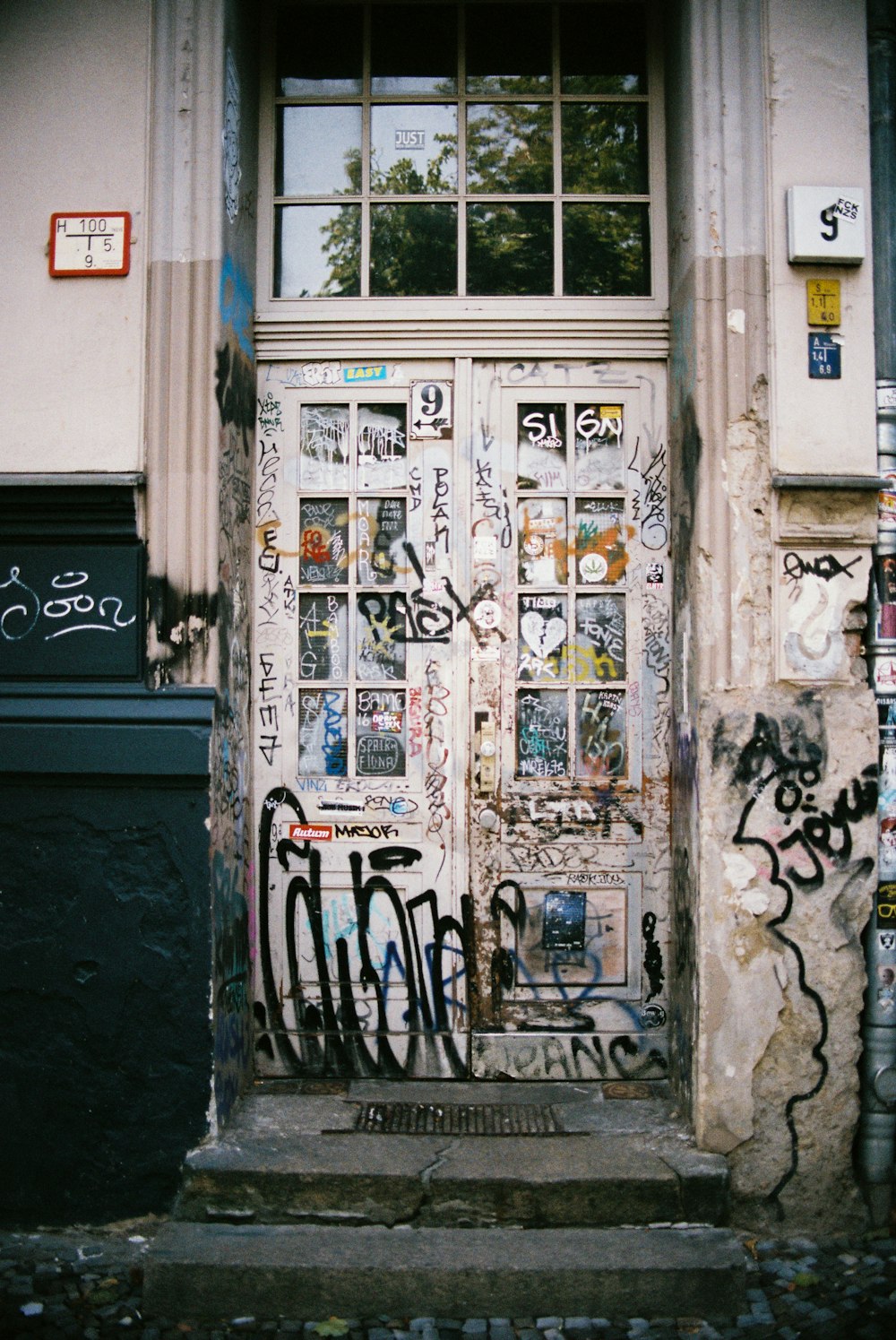
Clean Door

I never felt quite comfortable with Elaine. There was something a little off. I recognised her bag as a genuine Chanel and her scarf was Hermes, but her nails were cracked and dirty and there was a dead look in her eyes. It didn’t matter, I needed the job. Times were hard.

“You want all of this cleaning?” I asked. I stared at the battered, graffiti-covered door. “It may well attract graffiti afterwards. I mean, almost straight away. It may be easier to paint over it.”

Elaine shook her head. “I would like the door taken back to the original paint,” she said. Her eyes darted around as she looked for an explanation. “I need to find the original paint for correct restoration.”

That was another thing. When Elaine spoke, she used an accent that I would have put somewhere in the Home Counties, with nothing particularly striking. The way she said the words was as English as Buckingham Palace. The words she used, however, were just that little bit off, like she was translating in her head. Still, these sort of cleaning jobs had dried up recently. “It will take some time,” I said. “I’ll have to go carefully as well. It’s an old building and the wood may not be sound. I may have to use specialist cleaners.” It was a rundown building in a rough part of town. This alley was the back of closed shops, empty sheds and long disused garages. It wasn’t worth the effort, but who was I to argue with the fee she was paying.

“As long as you are thorough,” Elaine said. “And you requested half of the fee in advance.” She handed me a bulky envelope which I hastily stuffed inside my jacket.

“Thanks,” I said. “I’ll start this afternoon.”

I got back into the van and discreetly checked the envelope. The notes all looked genuine, but it was the same strange jumble. They hadn’t gone to a bank and withdrawn the cash in neat bundles. Instead it was a mishmash of notes of all denominations and conditions. I checked a few with the pen that I had picked up but couldn’t find a fake. My instincts were screaming at me to run, but I had rent and the van payments to consider and no other jobs on the horizon. I carefully stashed the money under the toolbox in the back and went to inspect the door.

I didn’t believe for a second that Elaine really cared about the original paint, but I took pride in my work and I took pains. If you have the right product, it’s not a hard job, but it took some time as I was washing off the chemicals between scrubbing the layers. I wondered if I would get in trouble with the gangs. It didn’t seem that sort of street, but I could feel an uneasy prickle between my shoulder blades as I worked, as if I was being watched. It didn’t matter. I needed this very generous payment.

The last layer was the worst. It was some strange signs that I had never seen before, not in years of graffiti removal. I squinted at them and took a picture on my phone. It looked like some strange writing, or a collection of symbols that should have been on ancient monuments, not a scruffy doorway in Leeds. I sent it to Kate at the University. She was into odd languages and perhaps could tell me who had tagged this.

It was getting dark as I finished. The usual chemicals hadn’t worked on the last layer but I fell back on the old faithful mixture of washing up liquid and biological laundry detergent. Eventually even that last tag was wiped away and the mushroom coloured door was left clean in glory just as the streetlights came on. It had been easy money, really, and I felt a twinge of conscience at the amount I had overcharged, but I had done a good job and the door gleamed.

My phone vibrated and I pulled it out of my pocket to check the text. I smiled. Kate had got back to me telling me not to wipe off the last layer, under any circumstances. I had to wait until she got there. Well that was too late. I sent back a pic of the immaculate door just as it was opening. I wasn’t expecting that. I hoped that the guy inside wasn’t upset at the change in his doorway.

Elaine appeared at my side, making me jump. “You have done well, especially with that last layer.”

“It was a little tricky,” I said. I fought with myself for a moment, and my conscience lost. “I needed some extra chemicals that I hadn’t accounted for in the quote for the job. I think…” I trailed off.

The man stepping out of the door looked barely human. Grey skin stretched tautly over sharp cheekbones and his eyes were red-rimmed and sunken. Great, I thought, a junkie. The elderly overcoat hung loosely on his tall frame and he swayed a little as staggered down the steps.

“Is that your door, mate?” I asked carefully.

He ignored me and turned to Elaine. “You have done well, my dear. You shall be rewarded.

My phone started ringing. Automatically I pulled it out of my pocket. It could be work. “Excuse me,” I said to Elaine. It was Kate.

“You need to get out of there, now!” Kate yelled frantically. “Just go!”

“I’m just finishing up now,” I said. “I’ll get my money and I’ll be over straight away.”

“Don’t wait for the money!” Kate screamed.

With unexpected, snake-like speed, Elaine pulled the phone out of my hand and ended the call. “You have done a wonderful piece of work,” she said, with a chilling smile.

I looked back at the door. That last layer of graffiti, that last bit of paint. It hadn’t been graffiti. I could feel the realisation flowing through me like ice water. It had been a warning.

“You removed the lock on the door,” the man said, also smiling. “Now you need to find what you have freed.”

I watched as the man’s smile changed, his teeth lengthened and his jaws gaped. I screamed and screamed as he stepped closer. And as his teeth fastened on my neck, everything went black.

Nearly October

It’s nearly October!!!

Photo by Katerina Kerdi on Unsplash

I get giddy at this time of year, ridiculously so. I love autumn, the cosy nights drawing in, the weather getting fresher, and the wonderful display of colours as the trees shed their leaves. And, yeah, I’m a sucker for all the spooky stuff that starts spilling out everywhere.

Years ago I took part in the October Frights Blog Hop, run by the amazing AF Stewart, which got me hooked on writing for October. Last year I ran an entire month of stories about Kane, full of opinionated ghosts and bewildered mortals. This, with some new material, translated into An Apprenticeship of Ghosts and I’m currently working on a sequel.

It’s compulsory for an author to put in a link, so here it is

I have a lot of short stories kicking around that are set in what you could consider is outside the ‘real’ world. Some are plain horror stories, others are set in the world of the White Hart, while some are just a little supernatural. I’ve decided to group them all together for a month of spooky stories, I’m throwing in some new pieces as well, and they’ll later be grouped together in a collection that will appear on Amazon probably near Christmas. I hope that you enjoy them, and I apologise in advance for the extra notifications. Fortunately for the sake of people’s inboxes, I won’t be publishing most of them on Substack, just on the two writing blogs.

And speaking of Substack, the routine that I’m trying to develop is to publish a little chat or news article once a week on a Wednesday. It may be one of my Research and the Author articles, or perhaps news of any publishing that’s happening. Except for this October, I have four Wednesdays and a commitment to stories. So on those four Wednesdays, there’ll be a linked set of stories with a focus on supernatural creatures, and those are the only stories that will make it to Substack.

And still speaking of Substack, the instalments of The Guest are lagging a little behind on Substack. To make things easier, I’ll be bringing them all out at once, so the decks are cleared. That also gives me time to set up The Guest for publication on Amazon.

This brings me on to things that will happen in October. Tomorrow, on 1st October 2026, I’ll be closing my Draft2Digital account which leaves all of my published work on Amazon. I’m tentatively looking into alternatives, but it’s low on the list as I try and tidy everything up to make a clear space for me to write fun new stuff which may or may not include werewolves. It is, however, still on the list, and I’m happy to hear any suggestions.

The 31st October 2026 is a little busy for me. That’s the day that I close my Royal Road account and take down The Guest. It’s also the day that I stop posting on my WordPress account, apart from occasional reminders that I’ve transferred over to Blogger.

Photo by charlesdeluvio on Unsplash

This October is a big step for me, and, as usual, I have no idea what will happen next. But I’m more than happy to hear opinions and ideas so please leave a comment and let me know what you think.

Making Mindful Changes

Photo by Kim Stewart on Unsplash
The sort of calm that I aspire to instead of the chaos that usually reigns

I wrote an article, I read it back, and it’s kind of dull. I want a bit of life in my writing, but when I read it back, it was meh. So I’ll start with the To-Long-Didn’t-Read summary and leave the rather limp but proper article attached. So, in summary:

  1. I have no idea how to punctuate this part, and I didn’t realise that there were fancy things for lists, but now I know! Lists are no longer safe
  2. The last instalment of The Guest is 28th September 2026, if all goes well. There’s a reasonable chance it will appear on time despite my track record. That is the last piece of fiction that I’ll post on Substack and Royal Road. There may or may not be a sigh of relief from those sites, but I’ve got more bewildered by the week trying to keep track of everything, so I’m cutting a lot out. News and articles will still be posted on Substack, which will be acting as my newsletter.
  3. I close my Draft2Digital account on 1st October 2026. I’d like to think that I’m special, but I’ve got the sense that there’s a stampede of authors leaving them. And I say that I’m closing the account then, but I fail with tech, I fail with complicated procedures with websites, and I get the sense that the Draft2Digital helpline may get a little congested, but my account should disappear some time around the beginning of October 2026. It’s a shame, because it was once a site that I truly trusted.
  4. I start the month long daily posting of spooky or not-our-world stories on 1st October 2026 and I apologise for the excess of WordPress notifications.
  5. On 31st October I get busy and I close my Royal Road account. I ought to feel a sense of loss, but I’ve never settled there. I’m an old lass and a square peg in a round hole there. I ought to make more of an effort, but I don’t have the time, energy, or understanding of LitRPG, so it goes. At the same time, I’ll take down The Guest from all blogs and translate it to Amazon. I have absolutely no idea how long that will take. Watch this space.
  6. That day, 31st October 2026, is also the last day that I’ll post on my WordPress blog. I ought to feel sadder about it. Instead, it will be one less complication.
  7. I’ll start a new fiction series on 2nd November 2026, the first Monday in the month. I’m currently undecided whether it should be a sequel to The Guest or whether I should go Steampunk. Comments on this welcome. Going from a cosy kitchen to the dismal East End of London, awash with vampires and dark deeds, may be a step too far. I may, of course, decide on something entirely different. If you’ve followed me for any length of time, you’ll know that the chances of me sticking to a plan are lower than a soccer club winning the Superbowl.
  8. On 30th November 2026 there will be a cull of fiction from my blogs. I’ll take down Under Dark Hills, Invitation Accepted and all the stories that I published in October 2026, once again with a view to translate to Amazon. Then things should calm down…
  9. I think that’s everything covered. Read on if you feel like it, comment if you think that I’m missing something, and know that I’m trying to play fair with my readers and I’ll answer any questions about my writing that you have.

Now the long version.

It’s coming to the end of September, and I’m finally getting around to the word of the year. I’ve seen so many people choose a word that gives them direction and purpose, and I chose Mindful. And I’ve been anything but since. That’s changing now.

It started with me actually thinking about my writing blog, and how comfortable, or otherwise, I felt with it. That led to a massive shift from WordPress to Blogger, and after 31st October 2026, I will not be publishing new content on WordPress. I pay for its upkeep and the site name, and once this year’s payment runs out, the WordPress content will disappear. I’ve gone through most of the 600 posts, but I plan a double check, probably after Christmas, to pick up any strays.

I’ve also made the choice to shift a lot of the stories from my blog into books, to try and keep them. I fret about losing them to computer malfunction and forgotten blog pages. I’ve an uneasy suspicion that I’ve got some stories still missing, but it is what it is. It’s part of the Mindful thing. Stories kicking around on my blog feel like a weight, like I should be doing something with them. Once something has been published, it’s set in stone and I can’t bother with it anymore. The weight of that story disappears. Once I’ve got Further Tales from the White Hart out, which will be published as a collection with Dark Pictures and Back at the White Hart, I’ll be publishing the collected spooky or alternate stories that I’ll be publishing every day in October – a lot of old stories, but some new ones sprinkled in after the end of November. I’ll also be publishing Under Dark Hills, Invitation Accepted, and The Guest, though I’ll leave The Guest up for at least a month once the story has finished before transitioning to book.

And speaking of The Guest, on Monday I published an instalment on Blogger, WordPress, Substack, and Royal Road. That is too much and it’s easy for posts and comments to slip through the cracks. After The Guest is finished, I’ll stop publishing fiction on Substack. After all, I went there to make a newsletter, not to add to the mental load. I’ll stick to news and chat, with the occasional article thrown in, probably on Wednesdays. It’s still worth subscribing to me there, as that’s where you can subscribe to newsletter style emails.

Royal Road is a little different. It’s a great site, and I wrote the majority of The Guest in a concerted effort in their November challenge last year, but it’s not really a good fit with my writing. There’s a lot of LitRPG fiction on there, which I’ve never got the hang of. I can’t contribute properly, and I’ve failed at interacting. It’s distracting me, and there’s no benefit for anyone, so I’m closing my account there on 31st October 2026.

My hope is that after 31st October 2026, I’ll only publish fiction on the Blogger version of Always Another Chapter, and news, chat, and articles there and on Substack. That should clear a lot of clutter in my mind. If I also clear the clutter and get those blog stories onto Amazon, it should, I hope, allow me to be mindful, intentional, and write a whole load of new stories. And while I’m sorry that I’m not working harder at the Draft2Digital side, and I’ll be closing my account there from 1st October 2026, again, it makes space in my thoughts and I can come back to that word, Mindful.

Please keep your fingers crossed that it all goes smoothly. It has to happen at some time, right?

Getting Darker

Photo by Majid Abparvar on Unsplash

You can read the story so far from the beginning here

“I wish that there was something more that I could do,” Alison said.

“I’m grateful for the company,” Hilary said. “It seems a little empty here at the moment.” She looked around the kitchen. Bracken was peeling potatoes, sitting at the kitchen table opposite Paul who was busy slicing carrots, ready for a large batch of beef casserole to stash in the freezer. “I’ll be glad when they get safely back. Who knows what they’ll find when they’re looking for the stones.”

Alison gave the plate a last polish and slid it into its place in the cupboard. “The weather is awful. But I suppose I understand that they needed to move quickly.” She shook out the tea towel and picked up a damp cloth. “I should have brought the yarn for my next knitting project. I’ve finished one sweater, but I want to get another one done before Christmas.”

“That’s a bit ambitious, isn’t it?” Hilary asked, glad of a different topic of conversation. She added pepper to the handful of flour in the plastic bag with some dried parsley and thyme. “There’s a lot of knitting in a sweater.” She slid the bag into a bowl, folded back the edges to keep it open, then added a large tray of diced beef. “And Christmas is only a few days away.” She closed the bag and then shook it vigorously, coating the meat with flavoured flour.

“Normally it’s just me at home at night,” Alison said. “Once the boys are asleep and everything’s cleared up, I like to sit for an hour or so, just in the quiet with my knitting. I get loads done.” She wiped carefully around the sink. “And it’s just a straightforward kid’s sweater. There’s not a lot to it.”

Hilary glanced over at the table. The vegetables were almost ready for the casserole. “Could you fill up the kettles and perhaps get some mugs out,” she said. “They can’t be much longer.”

“We could get the soup out right this minute,” Bracken said. “It tastes much realer if it is heated on the stove and not in that microwave.”

Paul looked up. “Too late,” he said. “I think that I can hear them.”

“Thank goodness they’re back.” Hilary rushed to the window. “It’s been hours!”

***

Tom took a large mouthful of soup and sighed in pleasure. “It feels so good to be in the warm,” he said, accepting another roll from Hilary.

Magnus nodded. “It’s bitter out there.” He pushed his empty bowl away. “I’m glad we’re out of it.”

“The weather isn’t entirely normal,” Cabus said dryly. “It’s December, and some cold rain could be expected but there’s a bite in the wind that isn’t natural.”

Samgan nodded, smiling at Bracken as she refilled his bowl. “It felt harder to walk through the weather than one should anticipate,” he said. “It felt malicious.”

Magnus helped himself to another warm roll. “That makes sense,” he said. “I was considering going back when I was in fur. The rain was stinging.”

“How did you do?” Hilary asked anxiously. “Did you find all of the stones?”

Cabus took a tiny sip of his hot tea and sighed in pleasure. “Coming back into this welcoming warmth is extremely pleasant.” He looked over to Tom. “You have the notes.”

Tom checked his phone. “According to what we worked out, we’ve found maybe 80% of the stones that need moving. I suggest that Magnus and I go back in daylight, while we’ve got paws, and have a sniff around.”

“I can manage in daylight, as long as no-one expects too much from me,” Cabus said. “I can take notes.” He looked across the table. “And Samgan would be useful if he could also be there.”

“It will be a pleasure to accompany you if you think that I would be an asset to the work,” Samgan said.

Cabus nodded seriously. “I’m not at my best during sunlit hours, so I won’t be as aware of what’s around us. Tom and Magnus will be concentrating on finding the remaining stones and I’ll be logging the search. That means that we need someone with us who can keep a lookout for problems.”

“That is a sensible proposition,” Samgan said.

“I suggest that we start in the middle of the afternoon,” Cabus said. “It means that I’m slightly more functional, and it allows Tom to set up things at the Village Stores before leaving.”

Tom glanced up at the clock. “It’s barely 10pm, but I’m ready for bed. I think I’ll get an early night.”

“And me,” Alison said.

“Paul, before everyone turns in, please can you take Alison back to her house and pick up her knitting.” Hilary smiled over at Alison. “Sometimes it’s hard to sleep, and having something to do with your hands can keep you sane. You’re in a strange house, with a lot of strange people around, so it’s not like you can stress clean or sort out drawers to keep the worries at bay.”

“This house is extremely clean and well maintained,” Bracken said primly.

“I’ll take her,” Tom said. “It’s only next door and a few hundred yards, but I’ll take the car.” He looked over to Alison. “The weather is filthy, and if we take the car, you can load it up with anything you might need.”

Alison swallowed. “Thank you,” she murmured. “Having my knitting…” Her voice cracked and she cleared her throat. “With the boys away and everything going on…” She waved an expressive hand at the darkness outside. “Well, having a distraction helps.”

“Be careful.” Lord Peregrine hadn’t contributed much to the conversation, but he was on his second bowl of soup and his mouth was pinched with worry. “Things are reaching a peak. I cannot tell how the cards are going to fall.”

***

“It feels strange taking the car,” Alison said. “It’s really only yards.”

Tom pulled easily out of Rowan Cottage’s driveway. “I know, just down one drive, two minutes along the road and then up your drive.” The rain rattled against the windscreen. “But even if there weren’t scary things out there, it makes sense to use the car in this weather.” He indicated and turned into Alison’s drive. “But given how things are, I think I’ll park the car to make it easy to get away, just in case.”

Alison dug her keys out of her pocket as Tom manoeuvred the car close to the door and facing the drive. “I’ll just dive in and pick up the yarn,” she said. “I’ve got plenty of things at Rowan Cottage. There’s no point in hanging around.” She looked sheepishly up at Tom. “I know you’re the one that’s been traipsing around the stones in this filthy weather, but I’m exhausted and ready for bed. I just want to get this done.”

“I’m coming in with you,” Tom said, checking the handbrake before opening his door. “I don’t think we can trust anything, and no-one should go alone.”

Alison winced as the wind hit her. “Thank you for bringing me here, despite the weather,” she said. “I’m glad that Hilary suggested this, though. “It’s a way to keep me sane.”

Tom nodded. “I’ve got a couple of books waiting for me,” he said. “Just in case I can’t sleep.” He followed Alison into the house and then swore.

“I can’t believe it,” Alison murmured. She turned around to Tom. “Why did this happen?”

“It could be worse,” Tom said grimly. He walked past her into the living room and righted the upturned sofa. “It’s just a little mess.”

Alison shook her head. One of the curtains was hanging off the hooks. Books had been tumbled from shelves, an ornament was smashed on the fireplace, and the box of toys had been upended and the contents strewn across the room. “It’s not just a little mess.” She froze. “It could be worse, couldn’t it?”

Tom nodded. “But we don’t think about that right now,” he said briskly. “We walk quickly through the house, pick up your knitting supplies, and then we get back to Rowan Cottage. There are a lot of protections there.”

A shudder ran through Alison, and she nodded. “Follow me,” she said, marching quickly across the room to a large tapestry holdall and unzipped it. “Oh no!”

Tom looked over her shoulder. From the outside, the holdall was untouched. On the inside, skeins of yarn were tangled and the bundle of knitting needles was scattered, with at least half of the needles bent or broken. “I’m sorry,” Tom said quietly.

Alison zipped up the holdall, then stood straight. “Let’s get out of here,” she said quietly. “There are more important things to do.” She looked at the tumbled cushions and scattered crayons. “We need to deal with the cause, not the symptom. Let’s get back to Rowan Cottage.”

Note to Mum – if you leave an email address in the comments (I won’t publish it – promise!) I’ll get you a review copy. Thank you for thinking of me.

Adding Another Author Name

My supply of idiot hasn’t yet run dry. As I was rummaging around to look for interesting stuff for the upcoming Horror Month this October, I found a story that I hadn’t put on any blogs. I’d written it as a submission to a magazine, but it had been rejected and I’d forgotten about it. I think it’s about ten years old or so, and when I re-read it, I very much enjoyed it, because I couldn’t remember what happened and it was a nice surprise.

Then I remembered about the whole ‘even books of one page can be published on Amazon’ thing. I thought for a moment, decided that I would go for it, and now An Inexpensive Ring is on Amazon at 77p, or Kindle Unlimited. It’s a sweet, absolutely non-spooky story with kittens and an imminent mother-in-law, with a cover made on Canva.

As I said last week, I want to keep expectations realistic. Anything non-spooky is being put under the name Mari Medana. I did wonder whether I should choose a name that was perhaps more suited to Romance and Women’s Fiction, like Skye Summerdown (I checked, and at time of typing there is no author of that name, which was a relief). I kept the Medana part and used Mari as the first name, after my grandmother.

Then I got to thinking about author names. I got the author name Lyssa Medana because I wanted a name in a hurry and it’s the name of a character that I played in a long-running roleplaying game. It doesn’t really suit me. I’m an old, rather sheltered, white woman who last left the UK in 1984. My pen name doesn’t reflect that at all and I’ve been approached by all sorts of people and groups who have placed me everywhere but in my home of Yorkshire.

Then I thought of the variety of names of authors that I’ve seen on Amazon. There are some which bring out the snark in me, but, as I said, I’ve no room to talk, and I wonder whether I could have done better than Mari Medana. The name suggested by AI when I had my test request for a book cover was Eliana Vaelor and it sounds far better than Mari Medana. Still, I think I’ll stick to Mari and see how things go.

I’ve found another story that is a teensy bit spooky, but I could absolutely put it in Women’s Fiction with a straight face, so there may be more coming from Mari. I quite enjoyed the change of pace, so who knows how it will play out. I’m not writing full romances, though. That feels like far too much work and after watching the hard work my friend Holly White has put in (on Wattpad, with a Quidditch based romance), I’m happy to stick mainly to werewolves.

And speaking of werewolves and spooky stuff in general, I’ve been thinking about Further Tales from the White Hart. I have spent so much time fighting with this, trying to expand it and getting confused, that I’ve abandoned the struggle. It’s getting published in the same form it had when it was first posted on my blog. As the dratted story is still too darned short for Amazon to convert it to a paperback (long story due to all sorts of issues with previous publications), I’m bundling in all of the Back at the White Hart stories, which I am likewise refusing to convert from 36k words to almost double that to make it work, Dark Pictures, which also could potentially benefit from an expanded re-write, and a handful of stray stories. If it doesn’t convert to a paperback after that, I may cry. If all goes well, and the odds are against it, the whole thing should be ready by the end of October.

Currently not available but watch this space

But, at the end of this, apart from a couple of stories that are being saved for Horror Month, one or two stories that have been kept back for a potential full novel with Darren King as the main character and another couple that are held for a planned Steve Adderson story, that has allllll the stories set at the White Hart together in the three volumes of Tales from the White Hart, More Tales from the White Hart, and Further Tales and Collection Stories from the White Hart and the odds of a collected volume at the end of it are high.

And that’s one less thing that I need to worry about before I get to writing about werewolves.

Council of War

Photo by Mantas Sinkevičius on Unsplash

You can read the story so far from the beginning here

“This isn’t your hall, you know!” Hilary spread her hands wide and glared at Lord Peregrine.

Lord Peregrine shrugged. “It’s more comfortable here, the problem is here, and the best food is here,” he said with irrefutable logic. “What better place to hold a council of war?”

Hilary narrowed her eyes. “I’m not hosting you when the problem isn’t here,” she said. “You’re pushing your luck about the Winter Feast.”

Lord Peregrine smiled blandly and took his seat. “The food is excellent,” he sighed.

Bracken nodded as she brought in the last platter. “You is late, Lord Peregrine, and that lacks politeness.”

“My apologies,” Lord Peregrine briefly rose again and bowed. “I beg forgiveness from Mistress Hilary and the competent and capable Bracken.”

Bracken sniffed. “Thank you, Lord Peregrine, but you will still be late next time.”

Hilary smiled. “But he is still welcome, as are everyone here. You may eat without fear or favour.”

“And that reminds me,” Lord Peregrine said, shaking out his starched napkin. “I shall have to increase your allowance for food, as you seem to be feeding so many of my court.”

“You wouldn’t have to pay me if you made your own court a little more comfortable,” Hilary pointed out, but her heart wasn’t in it. Bracken had taken so much pleasure setting up the dining room that Hilary didn’t have the heart to protest too much. The old table was covered with an immaculate damask tablecloth and the glasses and silverware gleamed in the soft lighting. There were even bread rolls under snowy napkins because Bracken had found an illustration in an old cookbook and liked the idea. The final touch was a bud vase holding a spray of Michaelmas daisies that Samgan had found in a sheltered corner.

Despite Bracken’s best efforts, it was still a council of war. Paul had his blank notebook and pen next to him, while Cabus had sheaves of paper covered in notes next to his plate, the notebooks retrieved by Samgan carefully placed on the bookcase behind him to avoid mishaps. And despite the heavy atmosphere, Hilary could find a faint spark of amusement as she noticed that Tom had a protective arm over the back of Alison’s chair, and that Alison was leaning a little closer to Tom. “The food is nothing fancy,” Hilary said. “Although Bracken has done us proud. But eat up, as I think we’ll need our strength.”

For a few moments there was nothing but the soft scrape of serving spoons. Magnus and Tom heaped generous portions onto their plates, as did Samgan, but Lord Peregrine and Alison were more moderate and, unsurprisingly, Cabus had a token amount on his plate. Finally Cabus broke the silence.

“Whoever added the stones was insane,” he said. “They were a genius, but insane. It amplified the local current, but it also added what I suppose you could call feedback, the spikes and distortions in the energy.” He pushed a morsel of buttered carrot around his sparse plate. “These stones are now bedded into the magical flow, and taking them out is likely to cause problems with the magical flow.” He looked around the table. “Those problems could be explosive.”

“How bad could it get?” Tom asked.

Hilary passed him the bottle of wine. “It could turn out to be nothing, or give anyone with any magical sense a headache.” She took a sip of wine from her own glass. “But it could cause damage. That is, it could cause serious damage.”

“You mean, like buildings falling down?” Tom asked, pouring a glass for Alison before topping up his own glass. “Or could it mean people dropping dead?” Hilary shrugged.

“We can’t just react to what’s happening,” Lord Peregrine said. “This room is strongly warded, and Alison and Paul are both wearing protective talismans, but we are under attack. If we sit around too long, we are at a disadvantage. We have no choice but to take action. We have to remove those stones, no matter what the consequences.” He looked thoughtfully at his glass of wine, the deep red of the vintage glowing in the lamplight. “The consequences of doing nothing are far worse than anything that could happen when we move the stones. We have a demon among us, after all.”

“The werewolves are strong enough to move stones,” Magnus said. He took a forkful of his beef and ale casserole and savoured it for a moment. “Between Tom’s tools and our equipment, not to mention our own paws, we can deal with them. We’re ready when you call.”

“We have two areas of concern,” Cabus said. “We have the stones, and we have Rowan Cottage. This home is threatened, and it is also the centre of the problem.”

“Perhaps we could all stay at my home, at least for a while,” Alison said. “My kids are with their grandparents at the moment so they wouldn’t be in the way, and it could buy time to deal with this… awful situation.”

Cabus shook his head. “You have a generous heart,” he said. “But we can’t leave this place unattended. We cannot let it be taken over by darkness and used as a sort of headquarters. Besides, this is perhaps the most heavily protected place in the area, including Lord Peregrine’s halls. There are ancient protections here that are holding against the dark energy. I can feel them.” He smiled sadly at Alison. “And I think that we’ve already shown that your home is not protected.” Alison nodded and hunched a little lower next to Tom.

“We can’t be in two places at once,” Lord Peregrine said.

“That’s exactly what I suggest that we do,” Cabus said. “We will have one group that removes the stones, and one group that stays here, reinforces the wards, and perhaps acts as a safe haven for those of a magical disposition.”

“Have you found all the stones yet?” Paul looked up from his note-taking. “We know where the old stones are, from before, but we don’t know the locations of all the new ones.”

Cabus shook his head. “The notebooks that I’ve been reading aren’t clear about the exact placement in the woods,” he said. “But most of them are near the cottage. We’ll have to map them out.”

“I may be of some assistance in that endeavour,” Samgan said quietly. “I was drenched in the dark energy while I was confined. Tracing the echo of that energy should not be problematic for me.”

“If I have any say in the matter,” Hilary interjected, “Samgan can identify the stones, but he should stay at the cottage with us when we start fighting back.”

“Can we call it a hall instead of a cottage?” Lord Peregrine interrupted. He looked around the wide dining room with a table that could seat twenty. “There are dozens of rooms that have been added on over the years, plus the attics, and we can’t forget that the cellars are bigger than some houses.”

“It’s a witch’s cottage, it’s called Rowan Cottage, and it’s staying a cottage,” Hilary said firmly. “And Samgan should stay in it while all this fuss is going on. It’s not just that he’s still recovering from a dreadful ordeal.” She paused and smiled across at Samgam. “But he’s also strong, capable and can read the magical energy. Alison should be here, as she can be a target, as should Paul.” She instinctively glanced over her shoulder. “They are both vulnerable and we don’t want the thing in the cellar seeing what stones we’ve found if it’s looking through their eyes again.”

“So those in the house should be your good self, Mistress Hilary, Bracken, the Lesken sisters, Paul and Alison,” Lord Peregrine said. “I will go with Cabus and the werewolves to find and destroy the stones. I’ll warn the rest of my court to keep a distance.”

“I’ll send the wife and kids to my cousin in Harrogate,” Magnus said. “That’s out of the way and it will stop me from worrying.” He looked around the table. “We can’t afford to be distracted.”

“And, as someone who knows what it’s like from experience, if you find that you’re missing memories or feel that you’ve lost a chunk of time, then you need to speak up.” Paul was grim as he tapped his pen on the notepad. “It may even give us clues to what the demon wants. After all, he spoke through me to get Alison here. I guess he thought that he could use Alison to do things in the cottage as well as whatever he had her do while she was sleepwalking.”

“I suspect that the demon had her cover up the stones,” Cabus said. “The traces of mud and exhaustion after the sleepwalking would make it a plausible action, and we’re nearer the stones here than at Alison’s home. After all, the harder it is for us to find the stones, the harder it will be to remove them.” He reached over and patted Alison gently on the hand. “You were very brave to talk about it. And there’s no shame. We’ll look after you now.”

Lord Peregrine took a thoughtful sip of his wine. “Before we can take action, we need to identify the stones.” He looked around the table. “Cabus, I would ask that you stay here until this is over. Not only is it protected, but it gives you access to the notebooks and the stones nearby.”

“I had anticipated that,” Cabus said with a faint smile. “My bag is in my car, and I will not need nourishment for a few days.”

“Arrangements can be made if that’s a problem,” Lord Peregrine said.

Cabus smiled faintly. “I’m sure that there will be no need,” he said. “But thank you.” He turned to Samgan who was eating heartily. “If it suits Samgan, we can go out tonight after this pleasant dinner and start mapping the stones.”

“But it’s dark!” Alison said. “And the weather’s awful.” There was a patter of rain on the dining room window.

“It will not be pleasant conditions,” Samgan said quietly. “But we can prepare dry clothes and set out warm drinks before we leave.”

“And if you think that I’ let you go out in this without me staying up and watching for you, with soup and hot tea ready and the fire nice and warm, then you don’t know me at all,” Hilary said firmly.

“We shall be on watch,” Bracken said. “You will take care?” she asked Samgan anxiously.

“I will take care, little Bracken,” Samgan said with a soft smile. “And knowing that you will wait for me will keep me warm.”

Lord Peregrine raised an eyebrow, but he carried on with the plans. “I shall come with you,” he said. “It will not be perfect conditions, but we can all see in the dark, and the sooner it is dealt with, then the sooner we can remove them.”

“The sooner we can identify them, the sooner I can work out the best order to remove them,” Cabus said. “That will be the harder challenge.”

“Then eat up,” Magnus said pragmatically. “Of course I’m coming with you, and the sooner we start, the sooner we can get back into the warm.”

Missing Moments

Photo by Annie Spratt on Unsplash

You can read the story so far from the beginning here

Hilary hurried into the Village Stores. “Is Lord Peregrine here?” she asked. “I’m trying to get final numbers for the Solstice Feast and I need to get hold of Cabus. And I was hoping that I can borrow some of the big trays and pans from the kitchen here.” She trailed off. “Alison, are you alright?”

Alison forced a wan smile as she cleared a café table. “My kids are off with my ex-husband’s parents for a few days,” she said. “It’s part of the deal to keep them away from my ex. They’ll be back on the 27th.”

Hilary took the tray from her hands. “I know that you’ll miss them,” she said. “But there’s more to it than that, isn’t there?”

Alison burst into tears.

Hilary guided her gently into the kitchen, away from the interested stares of the customers, and sat her down on a chair. “I’ll make you a nice cup of tea,” Hilary said. “And you can tell me all about it.”

Paul stuck his head into the kitchen. “Is everything alright?”

Alison shook her head. “I’m glad that the boys are off with their grandparents,” she said. “I’ve been so worried.” She looked up at Hilary. “They may have to stay with them.”

“What are you talking about?” Hilary asked. “You dote on those kids.”

Alison shook her head. “I think that I’ve been sleepwalking,” she whispered. “I go to bed and everything’s normal, but when I wake up, I’m still exhausted and there are muddy clothes everywhere.”

“You mean the kids’ clothes?” Hilary shook her head. “Kids are always getting muddy and somehow their clothes multiply.”

“No, it’s not their clothes, but mine,” Alison said. “I wake up and the clothes that were clean and in my wardrobe are now covered in dirt and on the floor.” She clutched Hilary’s hand. “I must have been outside in them – and my boys were alone in the house. What if there was a fire? What if something happened to me while I was wandering around out there and they were left alone?” She swallowed convulsively. “I even checked the garden and there’s no sign that I’ve been digging around there, so that means that I went further, right? What about my kids?”

“Oh Alison!” Hilary patted her hand. “Try not to worry. I’ll help you sort it out. I know that you’d never willingly risk your children.”

A flicker ran over Paul’s face. “You should come and stay with us,” he said. “There’s plenty of room, and we can keep an eye on the doors to the outside.” He patted her shoulder. “I’m sure that it’s nothing, but staying with Hilary can reassure you.”

“I couldn’t,” Alison said.

Hilary squeezed her hands. “I think that it’s a great idea,” she said. “It’s going to be a little crazy for the next few days, but then you can relax in the quiet without worrying.” She looked back at Paul. “That’s an excellent idea. Alison could do with a little care, not to mention some decent food.”

“I’m fine,” Alison said. “Well, apart from sleepwalking and exhaustion.” Her strained smile didn’t reach her eyes. “I’m eating properly.”

“No you’re not,” Hilary contradicted. “All your energy is going on those sons of yours and you make do with a sandwich when you have a moment. A few square meals will do you the world of good.”

“We’d be happy to have you,” Paul added. “And you’ll know whether or not something is going on. You’ll be in a place to make connections.”

Hilary nodded. “Alison, get your coat and go and pack up some things. I know that you’ll only be next door, but I want you to be able to save your energy so pack up plenty of clothes.” She patted her shoulder. “Then go straight to Rowan Cottage. I’ll make sure that Tom and Lord Peregrine don’t argue, and I’ll be ready at the cottage with a nice cup of tea and we can get you settled.” She looked hard into Alison’s eyes. “If you’re not thinking of yourself, think of your boys. You need to be in a state to look after them when they get home.”

Alison’s shoulders sagged. “They’ll be off kilter with the disruption,” she said. “I mean, his parents are okay, but…”

“Then you’ll need to be rested and ready for them,” Hilary said. “Go!”

The cottage was warm and welcoming when Tom and Paul finally got back to the cottage and the kitchen felt overflowing. Alison already had a little more colour in her cheeks and was sat at the kitchen table, peeling potatoes. Hilary was fussing around Cabus who was sipping black tea and reading through one of the notebooks, taking copious notes. Samgan was sitting quietly in a corner watching Bracken as she fussed over a tray of shortbread fresh from the oven.

“I see that they’ve put you to work, Alison,” Paul joked. “Are you staying for dinner?”

Hilary looked at him, baffled. “Of course she is. She’s staying here for at least a week. I’m not going to chase her out at mealtimes.”

“When was that decided?” Paul asked. “Don’t get me wrong, I’m happy to see you, but I thought that you’d be looking after your lads. Are they going to be here too?”

Hilary stood, focused and still. “Paul, it was your suggestion. Don’t you remember that?”

Paul was taking off his jacket, but he paused. “I don’t remember,” he said softly. “And it’s worrying. There have been a few gaps in my memory over the last few days, and that seems to be one of them.” He swallowed. “I think that I may have been sleepwalking, but perhaps less obviously, as I was waking up still tired.” He looked at Alison. “I felt drained and exhausted, even though I’d apparently had a full night’s sleep.”

Alison nodded. “That’s how I feel,” she said.

“My exhaustion disappeared when I added extra wards to my room,” Paul said. “But I was still getting gaps in my memory, especially while I was at work.”

A chill ran through the room. “I’ve not been affected,” Hilary said. “But I automatically warded my room when I moved in here, and I’ve done all of my work rooms. I just think it’s good practice for a witch.” She looked at Tom. “Before I knew you, I was a little nervous, so your room got extra wards as well. I needed to know that you’d be safe in all sorts of ways.”

“I has had no ill effects, and no gaps,” Bracken said. “But it may be that brownies are not charmed.”

“Our nature is not susceptible to charms or any types of possession,” Samgan said. “I wish that I could use possession as an excuse for my former egregious behaviour, but it was the imprisonment and twisted magical flow that affected me. I cannot exculpate myself further.”

“I don’t want to be alarmist,” Cabus said. “If things were different then I’d suggest getting a carbon monoxide alarm or perhaps a visit to a doctor. However, we have a malevolent spirit in the cellar.”

“We have carbon monoxide detectors all over the cottage,” Hilary said. “I did a full fire risk assessment as part of the regulations for opening this as a B&B. The carbon monoxide detectors were part of that.” She pulled a face. “Though they obviously missed the cellar in their assessment. And you all seem in good health to me, although some need to be taking more rest.” She looked pointedly at Samgan and Alison. “I don’t know about the spirit.” She shuddered. “It felt so… evil but there were protective symbols on the floor. Even though it stirred when I first went down there, whatever it is should have been trapped there.”

Samgan looked down at the floor. “I may have inadvertently contributed to this problem,” he said softly. “I found myself affected in the room.” His head hung lower. “I stumbled around as I fled from the bookshelves. I may have affected any wards by walking where I shouldn’t or knocking things over. All I could hold in my mind at the time was escape. Looking back…” He swallowed and hunched his shoulders. “I seem to remember knocking into shelves.”

“Don’t be hard on yourself,” Hilary said firmly. “You are a hero for bringing those notebooks up, especially as you were weakened.”

“And there can’t be too much damage to the wards down there or there would be more than just a few missing moments,” Cabus said. “However, I have to agree with Hilary. It’s not impossible that there are mundane explanations, but we must take precautions. I’ll contact Lord Peregrine. Action must be taken, and it should start tonight.”

Making Plans

Photo by Corina Rainer on Unsplash

You can read the story so far from the beginning here

Hilary patted Bracken’s arm. “It’s okay to sit down now,” she said. “All our guests have food and drink and the dining room has never been so comfortable.”

Bracken wrung her hands and looked around the dining room. Hilary was right, the room had never looked so good. Lamps glowed in the corners, their soft light gleaming on the polished wooden mantelpiece and the immaculate pictures. The table was covered with a pristine white tablecloth, an old-fashioned one with a damask pattern of ivy leaves, and the centre of the table held platters overflowing with snacks. The polished sideboard held thermos jugs of tea and coffee together with pitchers of iced water and some bottles of wine. “It is a responsibility!” she said.

“Please come and sit down,” Lord Peregrine said. “We need to start the discussion.” He glanced at Hilary who gave him a pointed look. “One of the main reasons I asked for this meeting to be at Rowan Cottage was the excellence of the food,” he added. “And you have surpassed all expectations.”

Bracken’s eyes widened. “I surpassed!” she whispered to herself as she took a seat next to Hilary.

“Of course, it would have been more comfortable in the library,” Lord Peregrine continued. “But that is obviously not available and I am happy that Miss Hilary felt able to give hospitality.”

“I went into the library this morning,” Hilary said. “It feels fine in there. We would probably have been okay.” She looked around the table. Lord Peregrine was poised but relaxed, almost hiding the wary light in his eyes. Magnus lounged in his hard dining chair, toying with his pen. Cabus was upright with a solitary shortbread finger on a plate in front of him next to his glass of water. Tom was leaning forward, a frown on his face as he turned a gingersnap over in his fingers. Even Bracken, sitting primly on a chair with an extra cushion to give her height, her hands folded neatly in front of her, was stiff with tension. “Whatever is in the cellar is… difficult,” Hilary said. “But we should be safe up here.”

“The cottage is so stacked with wards that it’s almost vibrating,” Lord Peregrine said. “I cannot imagine a safe place. However whatever is down there must be dealt with.”

“I’m not sure whether it’s a creature, a spirit or just some wards with a lot of side effects,” Hilary said.

“Some sort of malignant spirit or ward would be my guess,” Lord Peregrine said. “I’m not easily affected.”

Hilary thought back to some of their earlier tussles. Lord Peregrine was a powerful fae and yet he had been helpless in the cellar. “That’s one of the things that worries me,” she said. “It wasn’t exactly pleasant for me, but at least I could get out.” She looked around the table. “And whatever it was only reacted when we exposed the inscriptions on the wall. Potentially we could go down into the cellar and there would be no trace of anything more dangerous than a miffed cellar spider.” Hilary shrugged. “Or not. It’s like living on top of a landmine. Anything could be down there and I’m not sure that I could deal with it.”

“At least it isn’t Samgan down there,” Cabus pointed out. “Anything that affected Lord Peregrine would also affect him. He would have triggered something already as no pooka could resist twitching curtains. The script would have already been exposed.”

“That is very truthful,” Bracken said solemnly.

“We can’t ignore him,” Magnus said. “I mean, we can’t ignore Samgan. He’s causing havoc. We need to find him and, I don’t know, tell him to stop.”

Hilary looked at him blankly. “Since when has telling a supernatural to stop ever worked?” she asked. “In my experience, telling something like a fae or pooka not to do something is more like an incitement to riot.” She looked at Lord Peregrine who smiled smugly. “They get creative.”

“Sam Scorton lost a day’s money,” Magnus said. “And the smell of the sour milk is still hanging around. Something has to be done.”

“If we can track him down, we may be able to talk with him,” Cabus said. “I’m not saying that pookas are all creatures of reason and logic, but it feels like Samgan is angry about something and, if we can mitigate that, then we may be able to soothe his feelings and get some peace back.”

“We still can’t ignore what happened in the cellar,” Tom said. “Because if Samgan does get in and decide to poke around, anything could happen.” He looked at Lord Peregrine. “No disrespect, but if Hilary hadn’t been able to cover the wall and drag you out, what do you think would have happened?”

“Something was definitely manifesting,” Hilary said. “But I have no idea what. It’s nothing like I’ve ever seen.”

“Perhaps I could accompany you down there?” Cabus said. “I’m not fae.”

Hilary tried to find the correct words. “I don’t know…” she said. “Do you know, I think I’d like a glass of wine.”

“You’re a creature of darkness,” Lord Peregrine told Cabus bluntly. “You could be possessed.”

“I doubt it,” Cabus said coolly. “I have a few tricks up my sleeve.”

“I bet you do,” Magnus murmured. He turned to Hilary. “I wouldn’t say no to a glass of wine myself.”

“I’ll get it,” Tom said, jumping to his feet. “At least I’ll be doing something useful. I feel completely helpless here.”

“You were far from useless when we had to sort out Sam’s dairy,” Hilary said. “You got the cows back in the barn and pulled down that awful poppet that had been stuck in the corner.”

“That was odd,” Lord Peregrine said. “There was something distorted about it, something that I don’t think Samgan could or would do. I don’t doubt that he was responsible for the milk turning despite all the precautions in the machinery, but that poppet was wrong.” He pulled out his phone and opened it. “I took a picture.”

Cabus looked at it thoughtfully, ignoring Magnus hanging over his shoulder. “That looks like a perfectly innocent, protective dolly that you can find on any of a dozen farms but…”

Lord Peregrine nodded. “Something twisted this before Samgan got there.”

“Annie was supposed to be sorting out that milking shed,” Magnus said, shuddering and backing away from the picture. “Sam Scorton has had no luck in there at all. Machinery is always breaking, cows are not giving as much or drying up early. The vet has had to come round a few more times than you would expect.” He gestured at the picture on Lord Peregrine’s phone. “I suppose we know why now.”

“The milking shed is adjacent to one of the worst affected magical streams,” Cabus said. “The energy in that flow is twisted and difficult to predict. Annie may have placed the poppet in good faith and the local flow caused it to degrade.” He carefully turned his shortbread on his plate. “And that would have helped Samgan. He may even had subconsciously drawing our attention to the matter. Pookas are sensitive to magical flow.”

“We need the notebooks,” Hilary said. “This all started because we were looking for the notebooks for the cottage, because we are all concerned about the flow of magic being disrupted.” She smiled her thanks to Tom as he poured red wine into her glass. “There should be records of the poppet, and records of what she did to the walls.”

“The notebooks looked quite old,” Lord Peregrine said. “A little white wine, Tom.” He caught Bracken’s eye. “If you please.”

“Some looked old,” Hilary said. “And I may spend some time scanning and re-copying. The Council is always chasing old notebooks. But some of those notebooks were newer and there were some blank ones stacked to one side. I’d bet that Annie was taking notes.” She took a small sip of wine. “What was she like, anyway?” She looked around the table. “I heard that she was a little sharp tempered.”

There was an awkward silence before Lord Peregrine cleared his throat. “She had the temperament of a badger with toothache, the dulcet tones of a donkey with tonsilitis and the generosity of a butcher’s dog.” He spread his hands helplessly. “She was not particularly popular, but she did her duty. In places where magical flows are so active, you need to have a strong personality, which she did…”

“She really did,” muttered Magnus.

Lord Peregrine raised an eyebrow before continuing. “But Annie could be relied on to provide minor charms for anyone that had the courage to approach her.”

“Like the poppet at Sam’s farm,” Magnus said. “And she helped a few of the cubs out when they were going through their first shifts. It’s always a tricky time for them, but Annie helped out.”

“And was guaranteed to pick an argument with the mother, or cause problems between siblings, or knock over something breakable,” Tom added. “I remember when the only thing she did was compare our grandmother’s cooking to pig slop and we were all relieved.” He stopped suddenly for a moment and caught Magnus’ eye.

“We’ll speak later,” Magnus said gruffly. “But coming back to the point. We need to find Samgan and we need to work out what is going on in the cellar.”

“You say that the library feels fine?” Cabus asked Hilary. She nodded. Cabus carefully realigned his shortbread before continuing. “The cellar is not important in itself. Right now, the important thing is the retrieval of those notebooks. I suggest that I attend late tomorrow evening, after I’ve fortified myself.”

“Are you sure that’s a good idea?” Tom asked.

Lord Peregrine shook his head. “Whatever was manifesting was pure evil,” he said. “And extremely powerful. I do not wish you to be possessed.”

“It is purely a matter of planning,” Cabus said. He picked up his wine glass and caught Tom’s eye. “I would be grateful if you could pour me a little wine – white, if you have it.” He watched Tom pour and took a small sip. “Hilary, you saw how many notebooks were stacked. Would it fill up more than one bag?”

Hilary exchanged a glance with Lord Peregrine. “I’ve got some big supermarket reusable bags,” she said. “I think that there were at least three bags full, if not more.”

“And those were the ones that we could see,” Lord Peregrine added. “It would be profitable to get as many out as possible. There may be more in the workroom.”

“I shall stand at the top of the stairs,” Cabus said. “I shall remain alert and venture down if it seems necessary.” He took a deep breath. “Hilary will go down the stairs carrying the bags and a rope. I’ll have the other end of the rope.”

“So you can pull Hilary out, just in case?” Tom asked.

Cabus shook his head. “My initial thought was that Hilary would fill the bags as quickly as she could. We would only retrieve the notebooks on the shelves on this trip, without searching for further information.”

“I’d be very surprised if there weren’t records in that workroom,” Hilary said.

“They can wait,” Cabus said. “As soon as a bag is filled, the handles can be tied to the rope, and I can pull the bags up – carefully!” The smallest hint of a smile flickered across his face. “I know how valuable and potentially fragile these notebooks are. I will untie the bag as soon as I pull it up to the top of the stairs, then I’ll throw the rope down for the next bag. That seems an efficient way to approach it.”

“I suppose it does,” Hilary said unhappily.

“You shouldn’t trouble yourself too much about keeping the notebooks in order,” Cabus said. “Just pack them carefully but tightly, empty the shelves and get back up as soon as possible. You say that you were unaffected in the living room?”

Hilary nodded. “But something may have leaked into it since then,” she said.

“Then the quicker you retrieve the notebooks, the better,” Cabus said. He turned to Bracken. “I would ask you and Tom to stay in the library, a little way back,” he said to the brownie. “You are the best chance of us quickly finding extra bags and baskets if they are needed.” He looked at Tom. “And I would appreciate someone with good reflexes and strength if things go wrong.”

“And because werewolves don’t easily fall under the control of vampires,” Tom said.

Cabus nodded. “That is true. I doubt that I could easily control anyone sitting around this table.” He smiled thinly. “That is a refreshing change.” He took another small sip of wine.

“And what about Samgan?” Magnus asked.

Cabus looked at Lord Peregrine. “You are the lord here,” he said. “I’m reluctant to make suggestions.”

“Please, suggest as much as you like,” Lord Peregrine said. “You seem to have plenty of ideas.”

“I suggest that our efforts are split,” Cabus said. “Hilary has mundane work to do, but outside of those efforts, she should concentrate on the notebooks and the issues with the cellar. I am happy to volunteer my aid.”

Hilary thought about the overflowing shelves. “Please, I’ll take as much help as you can spare,” she said. “And if you’ve lived in these parts for a while, the local knowledge will be so useful.”

Cabus nodded. “While we focus on the notebooks, Lord Peregrine and Magnus should pursue Samgan, perhaps starting by investigating the room under the new stores. I’m confident that you will know how to continue.”

“What about me?” Tom asked.

“And I is helpful,” Bracken added.

“I do not doubt either of you,” Cabus said. “Tom, you are busy with the opening of the new stores which can’t be abandoned. However, please keep your phone charged. I know how useful you are when things are unexpectedly dark.”

Tom shrugged and poured himself a cup of tea. “I’ll keep my phone on me.”

Cabus turned to Bracken. “Miss Hilary will be busy with work and the study of these old records, many of which will no doubt be obscure. She will need you to keep the house clean and to provide food.”

Bracken lifted her chin proudly. “I can be of use,” she said firmly. “And there will be plenty of food.”

“Which is just as well,” Lord Peregrine said. “The new lodger will be turning up tomorrow, probably in the evening.”

“What new lodger?” Hilary asked, her eyes narrowing. “What have you got me into? You’re not my lord, you know.” She leaned forward. “Keep pushing and I won’t make you any more brown butter biscuits.”

Lord Peregrine shrugged. “I thought that it was time that you had a new guest,” he said.

Facebook Jail!

I’ve been locked out of Facebook.

I know why – I was trying to mind my manners. Yesterday, 22nd September 2025, was my internet birthday and, for one reason or another, I got over 150 messages wishing me Happy Birthday! Today I’ve just spent over half an hour going along the list pressing the ‘Like’ button and trying to type in ‘Thank you!’ all that many times, and I think Facebook thought that I was spamming. I guess I was spamming, typing in ‘thank you’ over 150 times, but I was just trying to be polite!

I had to take a moving pic of my face, which I wasn’t particularly happy about. I don’t see any need for my face to be anywhere. I look like a bag of spanners at the best of times, and the last thing I want is for it to be out there in Internetland. They are considering whether my page follows community standards. As it’s mainly full of shared memes, I have concerns that I won’t make the cut.

Photo by Glen Carrie on Unsplash

So if you’re looking for me on Facebook, and you can’t find me, I’m sorry. It wasn’t my fault! And I suppose that now I need to go and learn instagram, if that’s still available!